
"The farmer is the only man in our economy who buys everything at retail, sells everything at wholesale, and pays the freight both ways." — John F. Kennedy
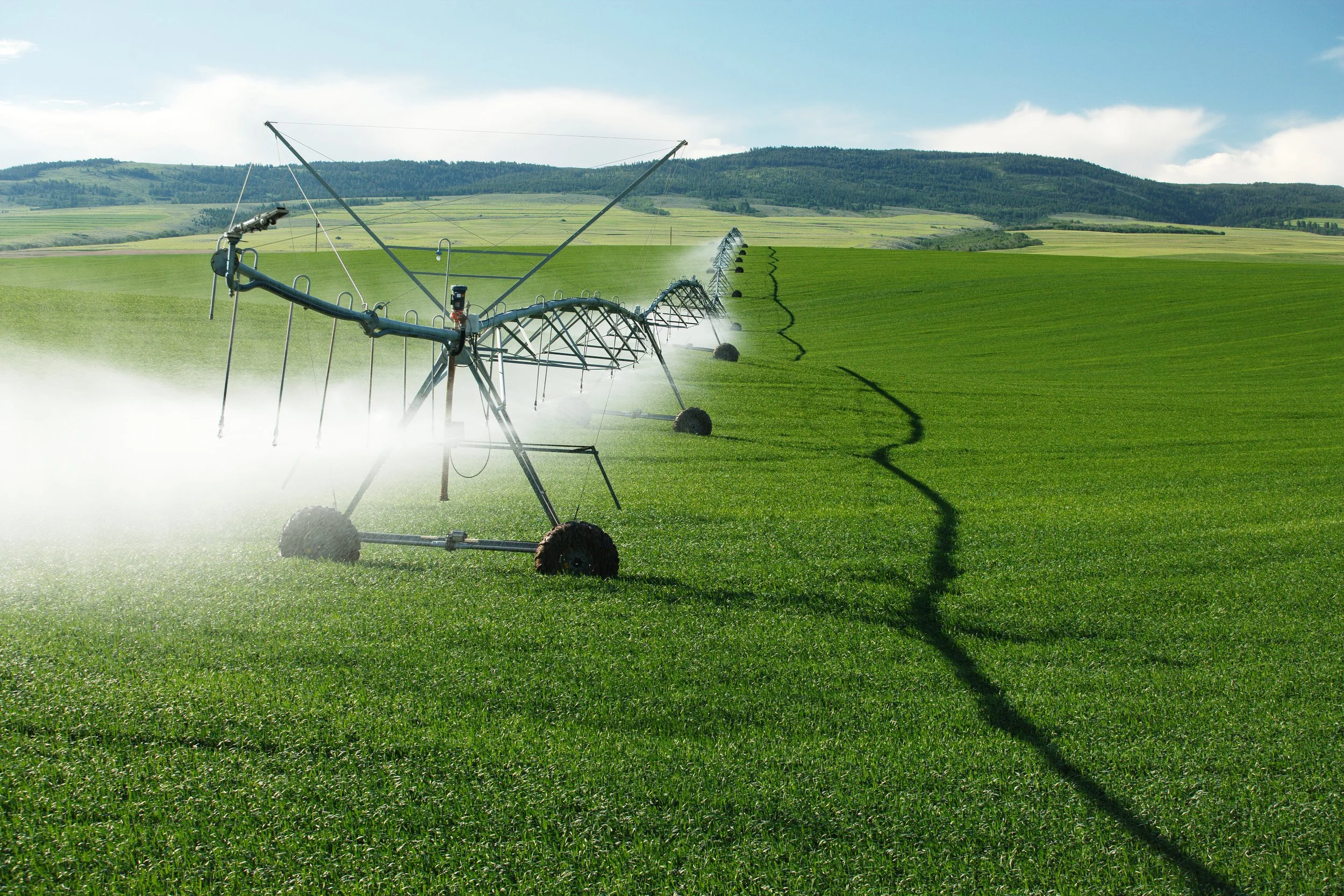
American farmers and ranchers have a tough time in good years. 2025-2026 have set the stage for making their life far worse, and by extension all of our lives a bit harder. I can’t recall another time when there have been so many barriers to the success of the American farmer and rancher:
1. Budget Cuts: Since January 2025, the Department of Agriculture has been gutted, both in workforce (24% job cuts) and dramatic cuts to grant funding and low interest loans that farmers and ranchers rely on, such as NRCS funding;
2. Tariffs and Trade Wars: Tariffs drove up equipment and material costs, and slashed the number of buyers for crops (like China and Canada);
3. Immigration Policies: Farm labor has taken a hit;
4. War: The Iran war has driven up the cost of inputs such as diesel, fertilizer and even seed (some peg the war’s impact to fertilizer cost at nearly 400%); and
5. Drought: Almost 2/3 of the lower 48 states are now in drought. The Southwest and Southeast are particularly impacted. The entire state of Colorado is in drought with a majority being in extreme or exceptional drought.
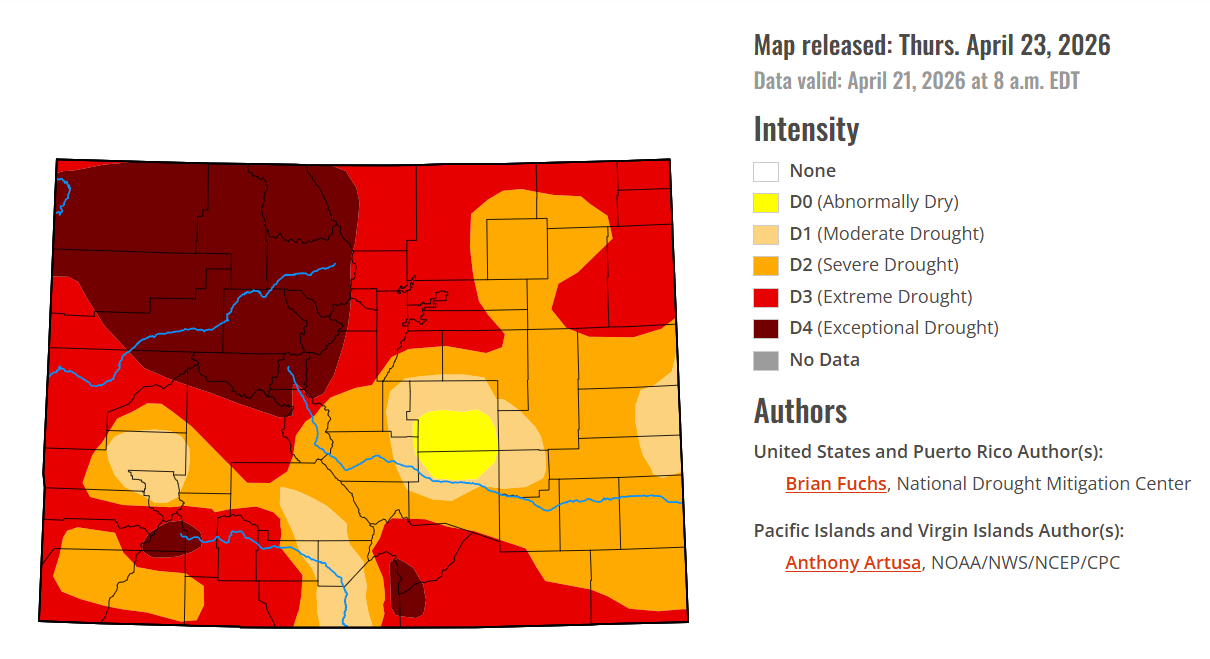
One can’t exaggerate how significant the current year drought is in the Southwest. The Colorado, Green, Platte, Arkansas, and Rio Grande Rivers originate in Colorado. These rivers flow through 19 states (and two feed the Mississippi). As snowpack dwindles, so do the rivers.
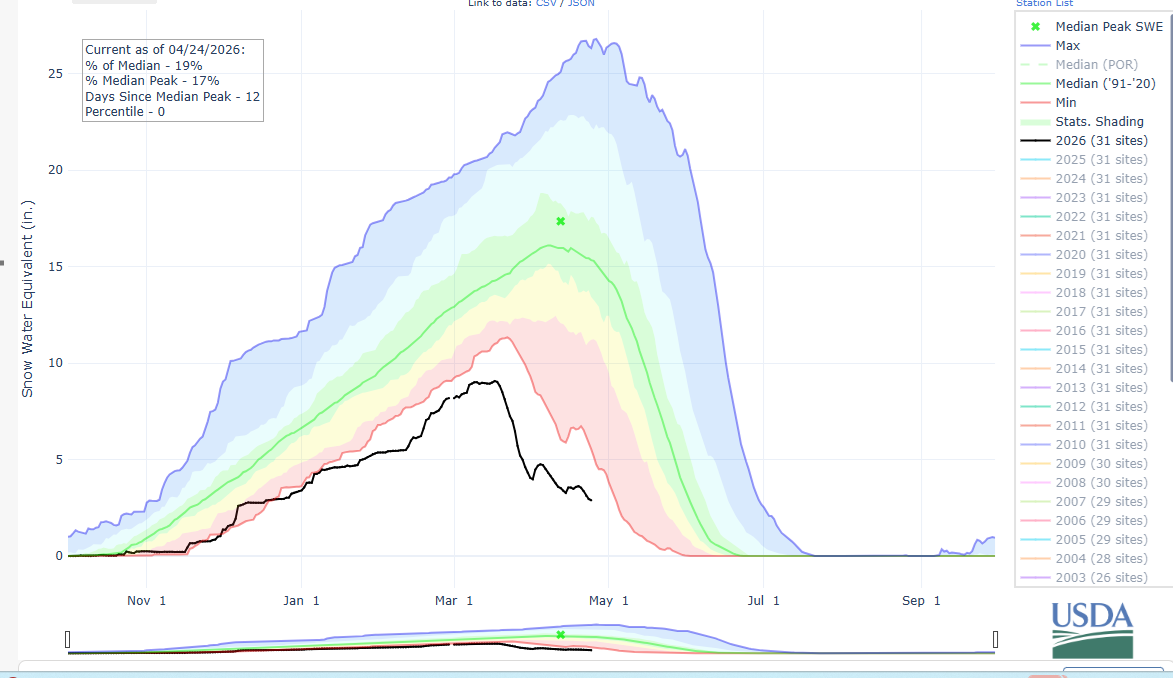
As the chart shows below, Colorado’ water availability is literally in unchartered territory (the black line is where we are; the green line is where we would be in an average year; and the redline is the lowest of record until this year):
While four out of five of these roadblocks are self-inflicted wounds, all five impediments are coming together to challenge the most honorable of professions: Farming and ranching.
Not much can be done about the impact of drought in the short term. One thing is clear, with the rise in global temperature, the atmosphere holds an exponentially greater amount of energy and that energy translates to stronger storms and more severe droughts. It’s volatility. As my Substack last week noted, 75% of registered voters view climate change as real and want steps taken to lessen the impacts.
The questions in the short term are can the American farmer and rancher hang on and how can they be supported? Better policy and eliminating trade barriers that interfere with the free market would be a start.
We are all in the boat with the rancher and farmer. Unlike any other profession, every American relies on the success of the farmer and rancher to keep the dinner table filled and groceries affordable. No one can afford another farm crisis like the 1930s and 1980s. We should all take steps to ensure that doesn’t occur.