• HOME
  • About
  • Published Works
  • Current Projects
  • Blog
  • Connect
Menu

www.kevinlandpatrick.com

Street Address
City, State, Zip
Phone Number

Your Custom Text Here

www.kevinlandpatrick.com

  • HOME
  • About
  • Published Works
  • Current Projects
  • Blog
  • Connect

MEET THE NEW BOSS, SAME AS THE OLD BOSS

March 3, 2022 Kevin Patrick

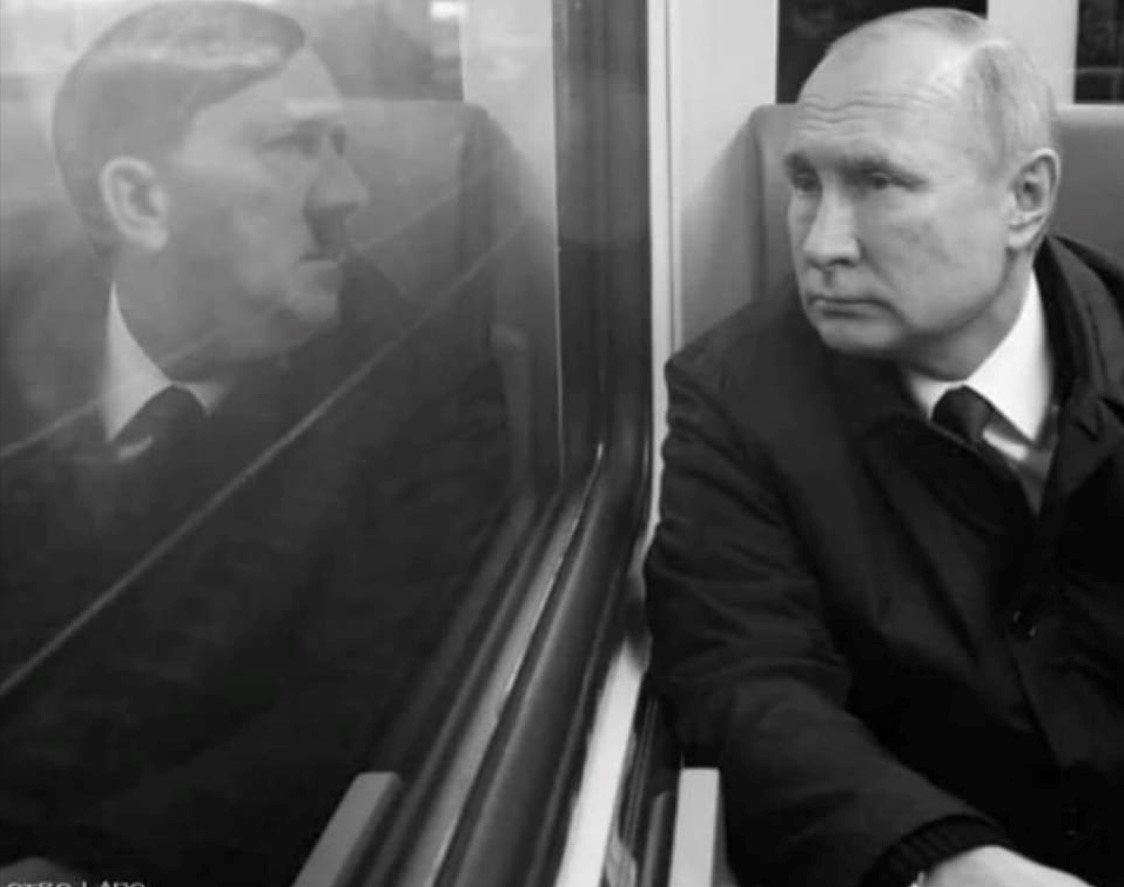
Some comparisons from the Who’s Won’t Get Fooled Again (1971) and history. I’ve written before on the acts of Vladimir Putin (October 29, 2018 blog). The past ten days have reinforced the adage that history always repeats itself. 

Following the March 1938 absorption of Austria, Adolf Hitler announced his intention to “re-unite” the Sudetenland, an area of Czechoslovakia that was populated by many German-speaking people. Hitler claimed that the country of Czechoslovakia and its borders never were legitimate and labeled the populous “ethnic Germans” that needed to be protected. With this justification, Hitler threatened the western democracies to accept the takeover of a nation or face war. In a separate attempt to avoid war, the western democracies appeased Hitler and, without input from the Czechs, allowed the forced takeover of the lands and people.  

Eighty-four years later, Vladimir Putin, in a 55-minute rant, claimed that the country of Ukraine and its borders never were legitimate and labeled the populous of Ukraine “ethnic Russians,” that needed to be protected, announcing that the country would be re-united with Russia (these statements were a repeat of his claims in 2014 when he seized Crimea, and the world did nothing). With this justification, Putin threatened western democracies, of which Ukraine is one, to accept Ukraine’s takeover or face war. This time, there was no appeasement. The western diplomats were stronger and far more united this time. Had they not been, Putin’s next target would have undoubtedly been the Kaliningrad Oblast, a Russian enclave detached from Russia on the Baltic coast between Lithuania and Poland.  

The lessons of history are to stop the bully. If you do not, you will be forced to confront a stronger bully later. Putin has grossly miscalculated. He is in a no-win situation. The Ukrainians will not accept occupation and he cannot control a country of 44 million with 180,000 troops. His economy is cratering. He will be toppled from within when the Russian people learn the truth and refuse to accept the path he has forged and pain he has caused… because history repeats itself and that is always the fate of autocrats who fail to appease the masses they control.

Water Security: The Impact on Water Providers, Wall Street, and the Banking Community

October 19, 2021 Kevin Patrick

Is it Malpractice or Just Old-Fashioned Ignorance?

Not a day goes by without an article on your news feed that decries a Megadrought in the West, the Colorado River Going Dry, Groundwater Depleted or Contaminated, Wildfires in the West, or Impacts to Infrastructure from Sea Level Rise. While a creative headline is designed to catch the eye, the underlying theme cannot be ignored. The reliability and security of the nation’s wide supply are of critical concern.

Water security is another way of saying steps and protocols to ensure the prevention of an interruption in supply. Interruptions can come in the form of water quality disruptions (contamination of raw water and potable water supplies) or water quantity disruptions (disruption of source, collection, treatment, or delivery of water).

Since 9/11 billions of dollars have been spent on counter-terrorism funding for protecting and hardening public and private water infrastructure. In 2001, the civilian budget in homeland security was estimated to be $15.9 billion. After 9/11, that annual budget increased to $71 billion. Costs to protect critical infrastructure have exceeded $315 billion, with a sizable junk attributable to critical water infrastructure.

The nation has taken steps to protect against the threat of terrorism to critical water infrastructure. Politics and media have stood in the way of America addressing the larger threat: Climate change impacts to the nation’s water supply. First, we need to get past the false narrative that it’s is a left or right issue. Anyone in the water industry knows it is neither, it is a malpractice issue. To ignore it is malpractice – or just ignorance.

For a moment, forget the cause of climate change. I know, that’s a hard one. But throw it aside. Focus on the impacts. Everyone who is involved in water supply issues knows the impacts are real. They must be understood and planned for.

To understand the costs is to understand the impacts of climate change on critical water infrastructure such as:

·       Variability in Supply;

·       Variability in Quality of the Supply;

·       Increase in Demands; and

·       Physical alterations to Infrastructure: Sea Level Rise and Wildfire

Fact:   In the Western-US milder winters are becoming the norm. The result impacts the demand-side of water usage: 1) Up to 80% of water is used for agriculture – longer growing seasons equal more crop demand for water, and 2) electrical demands increase for such things as air-conditioning and water pumping. On the supply side, milder winters result in less snowpack (water) or more of that water coming in the form of rain. Where we once relied on nature’s natural reservoir – mountain snowpack – to run off slowly, now more precipitation falls as rain, lost to use without more reservoir storage.

Fact:   Heat is energy: As the atmosphere warms, the amount of energy and water in the atmosphere increases. Storms are more erratic and powerful. Where once gentle soaking rains could be relied on, now damaging flood and sediment-laden runoff compound the supply-side equation.

Perhaps in no other field are the impacts of a rapidly changing climate more evident than in water supply planning. This is just a sample of what must be considered when discussing water.

Watch for:

Part 2: How have the Law and Engineering Adapted to the Changing Waterscape?

and

Part 3: Wall Street, the Banking Community, and Real Estate Industry Can Rest Assured… or Not

Climate Change and Water Wars

August 29, 2021 Kevin Patrick
WaterWars.jpg

Climate change is more about climate uncertainty and disruption. Many papers have been written on the impact of climate change and water security (including a few by me), but one increasing threat is that of conflict and war resulting from climate impacts to water availability. Water Wars was the subject of my first novel: “Threatened Waters.” An excellent read recently appeared in bbc.com entitled “How Water Shortages Are Brewing Wars” by Sandy Milne. To read the article click on the above picture.

A Happy 4th of July for the Nation

July 3, 2021 Kevin Patrick
4th Flag.jpg

Two hundred and forty-five years ago, a year into the Revolutionary War, freedom from the crown of England was declared by the Continental Congress. Nearly two and a half centuries, and yet some in the past year would believe that the institutions many have fought and died for stand in their way. We are a divided nation, but one which has withstood many dark days and challenges domestic and foreign. On this 4th, let us all see ourselves not as right or left, D or R, but as Americans fortunate enough to live in a country which may be, in Thomas Jefferson’s words, an imperfect union, but a union which where change and perfection are within reach.

I was born on the 4th of July, so it has always been a special day for many reasons. Make this 4th a special day for all. Happy 4th!

WATER WARS: ETHIOPIA'S AND EGYPT'S BATTLE OVER THE NILE

June 25, 2021 Kevin Patrick
DAM.jpg

Seventy-five miles before the Blue Nile flows into Sudan, Ethiopia is filling the largest reservoir in Africa, and no one but Ethiopia and Chinese interests is celebrating. At close to five billion in cost, China’s Gezhouba Corporation and Exim Bank are funding much of Ethiopia’s goals of becoming the power purveyor of North Africa. The absence of a coherent legal framework for allocating and timing the Nile’s flow has Sudan worried and Egypt furious. Like all upstream water users, Ethiopia claims its filling of the Grand Renaissance Dam will not impact downstream flows or the antiquated 1920’s agreement to share the Nile. Ethiopia sees the project as a means to provide food security, provide power to 60% of its citizens, and control drought while downstream neighbors are seeing red over the Blue Nile.

The conflict is not new. What do the US’s Lake Powell, Turkey’s Southeast Anatolia Project, and the Nile’s Grand Renaissance Dam all have in common? The answer is “Threatened Waters,” my first novel. What could possibly go wrong with that setting for a thriller?

A Better America and a Challenge

January 20, 2021 Kevin Patrick

As Americans, we believe in the possible. We have always felt that through hard work, strong principles, and empathy toward your fellow man (and woman), the years ahead and generations after us will be better. We have been better as a nation than we are today. Today is Inauguration Day. Regardless of your political affiliation, it should trouble us as Americans that Washington DC looks more today like Kabul, then that shining city on a hill Reagan spoke of.

           2020 has been devastating on many, many levels…and 2021 has started pretty damn rocky. In the last year we faced a pandemic – 400,000 Americans dead – and a divisive election, made all the more so by network media and social media distorting facts, truth, and calling the other side enemy. Now, everyone with a navel can broadcast an opinion and claim “facts.” A whole segment of the population gets their news and “facts” through social media which, is to say, not news and not fact. The definition of a fact is actuality – the empirical truth about events as opposed to interpretation. All else is opinion.

           Dwight D. Eisenhower said it best: “The clearest way to show what the rule of law means to us in everyday life is to recall what has happened when there is no rule of law.” So looking at what has transpired after the election and on January 6th, we need a restart. A reboot. How? A simple two-prong suggestion: 1) Delete all social media that isn’t traveling, dogs (and maybe cats and horses, yes, definitely horses), recipes, books, family, and fun; and 2) Because there is no such thing as true journalism these days, limit news to 30 minutes a day and force yourself to read or watch a mixture of news channels, some you ordinarily would not endorse because it doesn’t enforce your own beliefs. In other words, stop listening to the echoes and start listening to one another. You will not agree with the other, but you may learn to understand the other and perhaps, just maybe, meet the other part of the way.

           If you reject compromise, if you only believe in the dogma of the left or the right, a better America will elude us. In the meantime, stay safe, hang in there, and breathe deep. To paraphrase Theodore Roosevelt, when you reach the end of the rope, hang on.

Ethiopian Dam Fills and Egypt Threatens a Water War

July 18, 2020 Kevin Patrick
IMG_0446.jpg

Ethiopia’s Renaissance Dam was the subject of THREATENED WATERS: Reality Sets In on the Nile

BBC recently published a series of excellent articles on the Nile River controversy which has threatened water wars for the past ten years. Ethiopia, backed by Chinese investment, has damned the Nile with the avowed goal of becoming the hydropower provider to Northeast Africa. You can read the BBC here (or buy Threatened Waters and live the controversy vicariously).

Pandemics and Water Part 2: Migration

April 3, 2020 Kevin Patrick
This Washington Post article (Escaping the Virus) seems to support Pandemics and Water Part 1, a post I made March 19th. Those with means in urban areas are rethinking where they need to perform business. Will this result in a migration out of citie…

This Washington Post article (Escaping the Virus) seems to support Pandemics and Water Part 1, a post I made March 19th. Those with means in urban areas are rethinking where they need to perform business. Will this result in a migration out of cities, a form of #economic-distancing?

Click here to see the article

And if you missed the blog post Pandemics and Water Part 1 click here

Isolation Does Not Mean Isolated

March 24, 2020 Kevin Patrick
IMG_0132.jpg

Working from home, alone, is nothing new to authors. These past days, while incredibly stressful to others, is just more of the same isolated existence an author, artist, craftsman (crafts-person?), and many others embrace. But being in isolation or lock-down does not have to mean feeling isolated. In the past week, dozens of people I have not heard from in months or even years have reached out online. That not only feels good, it is good. Let’s hope that sort of connectivity continues when all this is over. It is but one of the positives that might come out of this dreadful virus.

Turn the TV off, turn off the news feed. It isn’t healthy constantly listening to the news of the virus, becoming upset as both the Democrats and Republicans continue their partisan bickering, or becoming frustrated at how ineffective the federal government is in this time of crisis. Since we apparently do not have much leadership at any level, lead yourself through this. Reach out and connect with others, see what others may need, how they feel, what you can do. Something very surprising may come come from all this. We might find that we welcome isolating ourselves from negative news, negative people, identify the more important things in life, and put more balance back in our lives.

Pandemics and Water

March 19, 2020 Kevin Patrick
IMG_0127.jpg

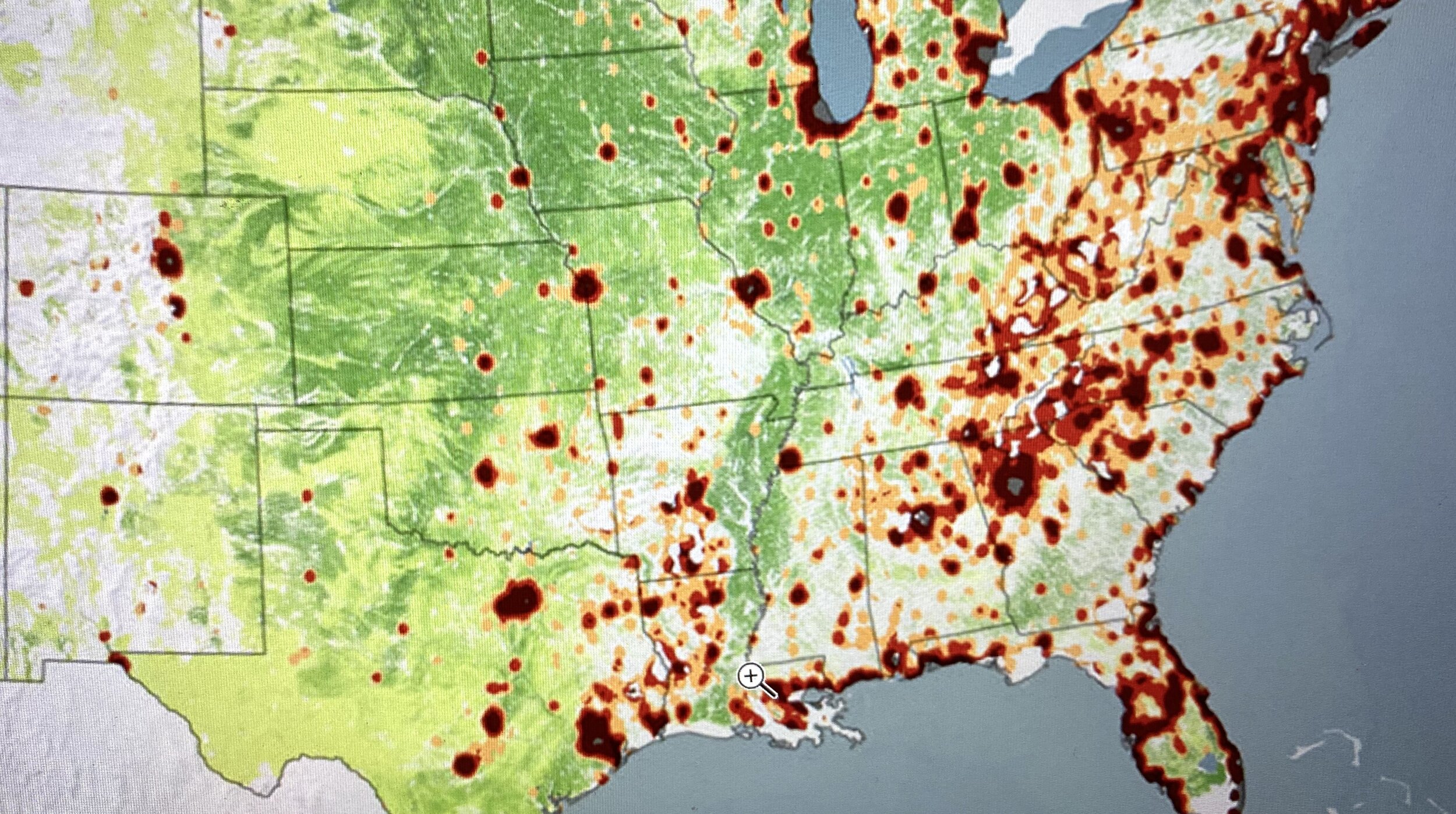
Freshwater has always been the driving force behind settlements and urbanization. In most instances, settlements centered around rivers and available water sources. The Industrial Revolution transformed the agrarian economy into an urban one with populations migrating toward cities. As cities became more densely populated, sewage disposal was little more than discharge to cesspools, land application and rivers. The proximity of sewage discharges to water collection sources gave rise to waterborne disease and pandemics of cholera, typhoid fever, and dysentery.  So, the limited availability of freshwater and sewage disposal limited urbanization.

The result was that centralized delivery systems for drinking water and centralized collection and treatment of sewage rose in the 19th century giving rise to the large urban areas we see today. Economic successes resulted. Now we see another limitation to urbanization which has its roots in the globalization of these urban centers.

Epidemics and pandemics are nothing new. What may be knew is the speed by which pandemics impact the globe and the frequency of their occurrence. In the less than twenty the world has faced the SARS Epidemic (2002) with 744 fatalities, the H1N1 (Avian flu) Epidemic (2009) with 18,000 fatalities, the MERS Epidemic (2012) with 400 fatalities, the Ebola Epidemic (2013-2016) with over 11,300 fatalities, and now the Covid-19 Pandemic which threatens to exceed all of these. Of course, the Covid-19 Pandemic so far is overshadowed by the AIDS Pandemic that took over 30 million lives and the 1918-1920 Spanish Flu Pandemic that killed 100 million (at a time when the world’s population was only 1.79 billion, Contrast that with today’s world population of 7.8 billion – or 435 million deaths in today’s numbers).

So, the question I put out there is whether social distancing and the economic effect of a global pandemics will trigger a reversal of land use patterns toward decreasing densities? Business and insurance is dictated by risk – the probability or threat of something happening multiplied by the resulting cost or benefit if it does. Will industries and corporations weigh the risk and decide to move operations to less densely populated areas; a form of economic distancing. Water and sewer can always be developed at any locale. It is what we water lawyers and water planners do. What will industry do?


← Newer Posts Older Posts →

COMING SOON

© 2024 Kevin Land Patrick