• HOME
  • About
  • Published Works
  • Current Projects
  • Blog
  • Connect
Menu

www.kevinlandpatrick.com

Street Address
City, State, Zip
Phone Number

Your Custom Text Here

www.kevinlandpatrick.com

  • HOME
  • About
  • Published Works
  • Current Projects
  • Blog
  • Connect

A MERRY, BUT NOT SO WHITE, CHRISTMAS

December 21, 2025 Kevin Patrick

Economics and Priorities Aren’t in Santa’s Bag

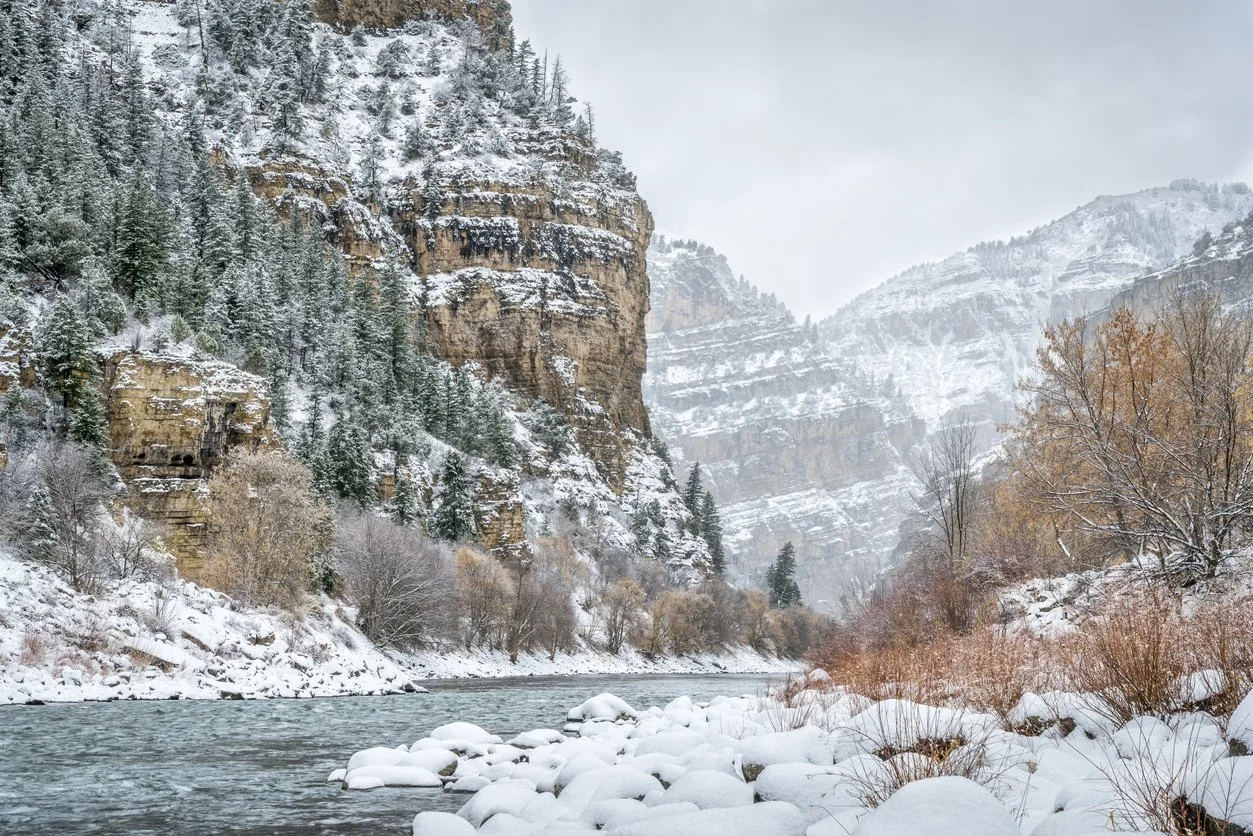
The latest figures are out on (water) year to date precipitation and water content across the West. I might sound a little like Ebenezer Scrooge, but it’s looking a bit ugly. The latest figures are:

·         Colorado River watershed in Colorado is averaging 54% of normal

·         Colorado’s Gunnison River is at 57% of normal

·         Places like Independence Pass (above Aspen) and Vail Mountain are 39-40% (excluding snowmaking)

·         The Upper Rio Grande is at 59%

·         Arizona is a mixed bag between 5% and 21% with a few exceptions (Little Colorado River)

·         Utah is between 52-65%

·         New Mexico is between 25%-49%

So far, it’s the third driest year in Colorado out of the last 40 years (2000 and 2018 were slightly worse). It’s not panic time yet, most water content storms arrive in February-March in the Rockies, but it’s a looming concern. Forty million people rely on the Colorado River. Another fifteen million rely on the Arkansas and Rio Grande, all of which are fed by the Rockies that are in sustained drought.

Water planners and agriculture keep a close eye on these figures. Fifty-five million irrigated acres provides the backbone of what is placed on America’s dinner tables. Data, records, modelling, and science in the field of water planning and agriculture is the difference in America between food security and insecurity.

Who provides this data? The National Oceanic and Atmospheric Administration (NOAA), the National Water and Climate Center of the US Department of Agriculture, National Weather Service, and the National Center for Atmospheric Research. Not having this critical information could cost lives and billions in economic harm to farmers and American industry.  So, when NOAA’s budget is cut by nearly 30%, the USDA’s budget is cut by $7 billion, the National Weather Service staff is cut by an estimated 30%, and it is announced that the National Center for Atmospheric Research is scheduled for elimination, one asks whether the people making these decisions understand what these agencies do.

Put simply, they are the difference between the  21st century and the 19th century. Storm forecasting, SNOTEL monitoring, public safety, groundwater modelling, flood monitoring and prediction…I could go on.  It’s pulling the rug out from under science and how lives, industry, investment, and food security have become second thoughts to tax cuts for a select few of the wealthy. This shouldn’t be political: Every American in every state has an interest in low grocery prices, water and food security, and lower utility bills. So, ask yourself why industries like cryptocurrencies (which produce no public good, while using vast amounts of water and energy), are subsidized and fostered while science (and stable economics) is shelved.

For Christmas, I’m asking Santa to bring back Congress, science, and common sense.

YOU DON’T HAVE TO BE A WEATHERMAN TO KNOW WHICH WAY THE WIND BLOWS

December 14, 2025 Kevin Patrick


Bob Dylan’s 1965 song Subterranean Homesick Blues used this line as did the radical SDS (Students for a Democratic Society) splinter group Weathermen in the 1960’s. Various permutations of the phrase can be traced to “The Packet” published in a 1799 issue of the Porcupine Gazette. The meaning of the phrase can be shortened to one three letter word: Duh. In other words, a truth so obvious, one need not look any further upon.

We are confronted with many Duh moments. Do we ignore them? Disparage them, or lean into them? I’ll throw a few out:

1.      The Earth is not flat;

2.      American politics are polarized;

3.      There is good and evil in the world;

4.      The sun rises in the East and sets in the West;

5.      Water is a liquid, water vapor is a gas, ice is a solid;

6.      Climate change is real.

How many will challenge the first five as “Duh?” Anyone challenging the first one we can leave out of the discussion as there are deeper issues there. What about that number six? There are still many among us that will not admit climate change is real. Climate denialism is a form of science denialism as the consensus of the scientific community finds that a Duh moment. It’s not that those who question climate change are lacking in intellectual capacity (they aren’t, they just have a different belief system), it is the sources that frames one’s beliefs have become chambers.

We all use our phones and computers to seek answers to questions and to broaden our understanding. These tools all use algorithms that manipulate what we see. How many times have you clicked on an ad or article only to see a deluge of similar items or articles delivered to your feed? Organizations like the Heritage Foundation, the Heartland Institute, and Fox News manipulate the right. On the left, the Center for American Progress and MSNBC steer the left.

These algorithms and influences harm. It’s the profiteering of division. They have no place in honest discussions of science or matters of water, food security, and critical infrastructure. They rhetorically manipulate our fellow citizens for the sponsor’s ulterior goals. Short of disconnecting, it’s hard to escape these manipulations. What we can do is challenge ourselves to seek viewpoints outside of our own echo-chambers. And, when confronted by self-proclaimed “skeptics” on an issue of science, know that the term skeptic is being misused. Skepticism is a part of the scientific method. Denialism is the opposite of the scientific method. It is a conclusion searching for a basis.

The next time you are confronted by a “skeptic,” research that source. Is the source funded opposition research? What entities are the sponsors of the skeptic? Of course, the downside is that after you do that online research, you’ll have a whole new set of algorithms that will chase you. It may make you go back to the Dewey Decimal System (for those born after 1995, you may have to look that up).

P.S., the photo confirms the Earth is flat, really, I read it online. 

COHERENT WATER POLICY ISN’T SEXY

December 7, 2025 Kevin Patrick

The photo made you look, right? Since when does the social media universe dictate what issues are addressed? Let’s face it, water policy isn’t sexy. In the present environment, Kim Kardashian and Pete Hegseth’s tattoos garner greater attention than real water issues that threaten the economy and American lives. I’m talking about water scarcity, water infrastructure resilience, pollution (PFAS, industrial waste, arsenic in groundwater)… those kinds of issues that seldom make it to the forefront.

The United States faces very real and very serious challenges in the water sphere, all of which can be tacked and solved. Instead, a sizeable share of the population, Congress, and the executive are content to do nothing, claim the problems are fake, or push the problems off to the next administration and the next Congress.  While President Trum is doing his best to ignore science, climate impacts to water sources, and politized water, the blame hardly started with the Don. Administration after administration both on the federal level and in some states are also to blame, left and right.

Take for instance forever chemicals in water (PFAS), that have been proven to an increase in certain cancers, decreased immunity function, and adverse children neural development. It took too long for regulations to be established and once they were, they were swept aside. Not a problem. Studies and data relied upon by water planners and water engineers have disappeared from view. Problem solved. Politics have never been divorced from water, but recently science is being estranged.

States and municipalities that have some of the most serious water scarcity issues covet data centers. Never mind that a data center can consume the same amount of water as a small city. Never mind that these same data centers require wholesale upgrades to the power grid and look to the local populous to subsidize those costs.

So, what can we do to put some lipstick on the water issues so they receive real attention? Here’s  small, and by no means exhaustive, list:

1.      Regulate the siting of data centers. They belong in water secure locales.

2.      Encourage state public utility commissions to make those new industries that dramatically increase electrical costs (new infrastructure, new power plants) to pay their share. Make growth pay its own way.

3.      Discourage cryptocurrencies. They serve no positive societal function and yet consume vast quantities of water and electricity.

4.      Increase revolving fund programs to harden resilience of municipal and agricultural water supplies to meet the challenges that population increases have on demands and climate changes have on decreasing supplies. It isn’t a left or right thing, it’s an economic thing: supply and demand.

5.      Stop playing political games. Sound bites that claim “the radical left” Californians are to blame for empty fire hydrants was not only false but ignored the real issues. The act of turning water south into the Central Valley Project hurt supplies, it didn’t deliver one drop to southern California municipalities.

6.      Crop subsidies have been around for nearly a hundred years. Incentivize drought resistant crops and farming practices. There is no reason to grow rice, cotton and almonds in the great American desert.

7.       Begin to think of water a little more like other natural resources. Think of water regionally, not locally. I’m not talking about a greater role for the federal government (which doesn’t belong in most water quantity issues), but more regional cooperation.

8.      Accept the science. Perhaps no other resource is impacted greater by climate change than water. In the real world of water supply planning and management, there is no left and right, there is only supply and demand and a recognition of the science and economics that impact supplies.

I could go on but I may have ranted enough. I’m going back to writing thrillers that aren’t as scary as these threats.


ARIDITY: AFGHAN CIVIL UNREST AND MASS MIGRATION

November 30, 2025 Kevin Patrick

I recently identified water as what could be the driver for regime change in Iran. https://kevinlandpatrick.substack.com/p/a-state-of-failure-the-coming-unrest . Now I turn to Kabul, the capital of Afghanistan. Like Tehran, Kabul faces the potential to literally run out of water forcing migration and suffering in a country forsaken by international relief due to the politics of its leadership.

To be sure, Kabul’s water woes have been decades in the making, but since the Taliban returned to power in August of 2021, the problems have worsened. A combination of the effects of climate change, water mismanagement, and rapid urban growth have intensified groundwater withdrawals. “Mining” groundwater is the name for when groundwater withdrawals exceed recharge. Kabul’s groundwater mining is reportedly 34,000 acre feet annually and growing. Water depths have declined 80-100’ and many wells have run dry. Those wells that continue to produce are increasingly contaminated by salts.

Why? How can a city, which sits within sight of the Hindu Kush, a mountain range with heights in excess of 20,000’ and snow covered in Afghanistan’s brutal mountain winters, be dry? The answer is a combination of factors:

1.    Climate change has increased evaporation and made the dry season longer;

2.    Urban growth. With population comes increased demands;

3.    Mismanagement: Back to back wars (Soviet-Afghanistan War 1979-1989), US War on Terror (2001-2021), and the Taliban who war against their own people has resulted in a brain drain and wholesale disregard for water planning; and

4.    Inadequate Financial Resources. Infrastructure (dams, reservoirs, delivery systems require capital. No one is rushing to the Taliban’s aid when they persecute and enslave their own people.

A combination of factors or a revealing common thread? The principle common threads between Tehran and Kabul are two: Mismanagement and climate change.

Climate change is drying the continents, increasing evaporation, and robbing soil moisture and groundwater recharge. Remember, evaporation returns water to the surface, but when 70% of the Earth’s surface is covered with saltwater oceans, 70% of the evaporative moisture from land falls on ocean, lost from the continents. A recent UN study revealed that three-fourths of the Earth’s land masses were suffering some form of drying as a result of changing climactic conditions in the last thirty years.

The second factor, of course, is something that is inexcusable: Water mismanagement. Places like Cape Town that in 2018 nearly ran out of water implemented conservation, instituted water education, and intensified proper water planning. That city is improving its water resilience. Will Kabul and Tehran? Likely doubtful. When people run out of water, are forced to migrate, and begin to suffer, they blame leaders. Like Tehran, it is a recipe for civil unrest in Kabul and regime change.

AN HONEST ARGUMENT ON CLIMATE CHANGE

November 23, 2025 Kevin Patrick

There are some, perhaps many, that say climate change is a hoax. One person in particular comes to mind. But here’s the thing. That’s not being honest. It’s not that some really disagree with climate change, they disagree with the urgency, severity, and most of all, cost of doing something about it.

A truthful exercise would not be to deny the science but make it an economic argument that the cost to the economy is too great to address it. While I disagree, that at least is an honest argument on climate change.

So, you say, it hasn’t been proven. Climate change is just the weather. It’s a natural phenomenon. Not really. The number of reputable and recognized scientists who believe that climate change is not real one can count on one hand, compared with the overwhelming number of scientists and models that confirm that fact.  

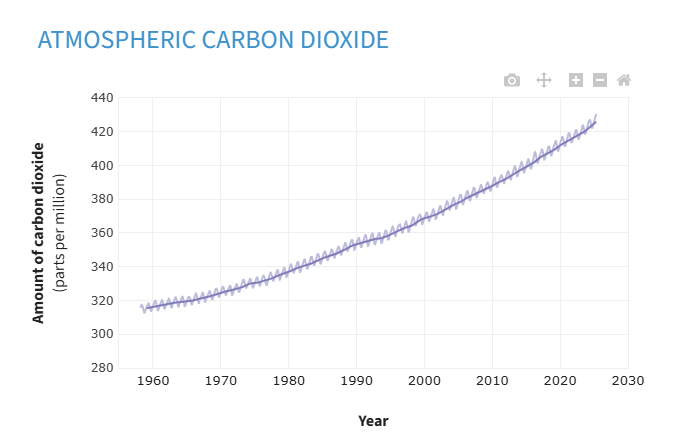
It’s hard to argue with science and records. Two quick charts tell the whole story:


Source: National Oceanic Atmospheric Administration,: https://www.climate.gov/news-features/understanding-climate/climate-change-global-temperature

Atmospheric carbon dioxide levels increased 3.75 parts per million (ppm) to 422.7ppm between 2023 and 2024, the greatest increase in records. As the charts show, its exponential. What does this mean?

Ten of the warmest years of record have occurred in the past decade. Temperature is heat. Heat is energy. The more energy in the atmosphere, the greater atmospheric events, storms, droughts, precipitation events. Each of these have profound economic costs. It’s Thanksgiving in the Rockies where I live and my lawn is green at 7,100’. Not normal. I say that because I’ve lived here for nearly half a century. Skiers are not happy and wildfire responders are nervous.

The honest argument for those that reject climate change is what is the economic cost to the economy versus the cost of not addressing it. That’s an argument that at least has integrity.

A STATE OF FAILURE: THE COMING UNREST IN IRAN

November 16, 2025 Kevin Patrick

Tehran is the latest example of a self-inflicted wound in the water sphere. It is inconceivable that the capital of a nation, a city of nearly ten million, may have to be evacuated. Why? Not Israel’s 12-day war, not a limited US attack on nuclear facilities (with questionable results), but by Iran’s own mismanagement.

Two decades of dryness and six years of severe drought has caught up to the Islamic Republic. Normally, such a climactic event would not severely challenge a well-planned resilient municipal water system. Not so in Iran, where over-consumption, mismanagement, and corruption have led municipal reservoirs being less than 5% of capacity and the government privately planning for evacuations.

While the West has long wished for the Islamic Republic to fall, it may well be civil unrest from within that effects change. Already, there have been student protests over water shortages at Tehran’s Al-Zahara University, and discontent among the populous who blame the rigidly controlled clerical government.

The Central Intelligence Agency publishes The World Factbook, the latest having been published in 2021. A 2012 Global Water Security, Intelligence Community Assessment developed at the request of the Department of State, identified water stress, particularly in the Tigris-Euphrates, Nile, Jordan, and Indus basins. Taken together, these studies reveal that stress caused by water shortages stands as one, if not the primary, threats to regional instability.

Why doesn’t Iran have ample water? Iran shares the Tigris and Euphrates with Turkey, Syria, Kuwait, and Iraq. While Iran’s watercourses are not major contributors to the basin, the Shatt al-Sarab waterway, formed where the Tigris and Euphrates merge, serves as a boundary between Iraq and Iran. Iran must make do with what it has. Groundwater over-pumping has depleted sources, made land unfertile due to salinization, and land subsidence is common. Iran’s climate is dry save for the rainy season between October and March. That translates for the need for storage (reservoirs). Tehran’s supply comes largely from the Lar River fed from the Alborz mountain range that separates Tehran from the freshwater Caspian Sea to the North. Supplies exist, infrastructure does not. That’s mismanagement.

Iran is rich in natural resources: oil, natural gas, chromium, copper, iron ore, lead, manganese, zinc, and sulfur. It’s governance has frustrated business dealings necessary for the country to develop and market these resources. Over 86% of the population is below 54. Over 75% of the population is urban and they are well educated. That is recipe for regime change by civil unrest fueled by water scarcity.


SNOW AND FIRE

November 11, 2025 Kevin Patrick

It’s time to pay attention…not panic, but concern. The NOAA 30-day and seasonal forecasts are out and they track the Farmer’s Almanac predictions for another water-short winter. In the west, water is an important topic but fire is the topic.

With ten of the warmest years of record having occurred in the past decade, continental drying is accelerating. Soil moisture is being depleted at an alarming rate. One hundred and fifty-eight rivers originate in Colorado, where the Rockies squeeze moisture moving west in the form of snow. Snowpack is nature’s reservoir, the source of our rivers.

The NOAA forecasts show a warmer, dryer, and windier winter in the lower Colorado basin and a warmer and windier winter for the upper Colorado River basin. That forebodes drought. Drought translates to wildfire risk. Warmth means more precipitation falls as rain, not snow. With that runoff occurs at once, not measure and slowly over the spring and summer. Wind robs snowpack of its water content in a process known as sublimation. Even if the heavens bless the Rockies with an average water year, warmth and wind can reverse a good snowpack, just as it did in 2025.

Wind also brings dust from the great American deserts in Arizona and Utah that falls on snowpack in the Rockies. As you may recall from the last time you rented a black car in Arizona, the darker an object, the hotter it becomes from the sun. The process of albedo, the sun’s rays are absorbed, not reflected. The result is snowpack melts faster. This is why with the loss of arctic sea ice, the Arctic is warming at a rate three times that of the rest of the planet (the ocean is darker than sea ice).

So, what to do? What can one do? On a micro scale, create a defensible fire buffer around homes, conserve water, make personal choices that reduce you water and carbon footprint. On a macro scale, vote. As a country, we seem to talk past the other side. In reality, everyone cares about their children’s future, about the American farmer and food security, and everyone wants a cleaner and secure environment for future generations. We aren’t as divided as the new channels and pundits proclaim.

With any luck, NOAA and the Farmer’s Almanac are wrong. Wishful thinking is seldom a good last resort.

A HISTORY OF INCOMPLETE DECISIONS

November 2, 2025 Kevin Patrick

I was stuck in an airport with flight delays last week returning from being an expert witness in a water dispute. It was an interesting case valuing hundreds of millions in water where the other side was making the argument that the value of water would drop because the climate of the Southwestern United States was all going to mysteriously revert to cool and wet with a plethora of water. In other words, Arizona was going to become temperate and wet and that climate change was not a thing.

Never mind that Arizona has not been cool and wet since the Eocene Epoch and Mid-Cretaceous era, a mere 40 million and 70 million years ago (respectively). Never mind that there is no scientific support for such a belief, and never mind that people in the water industry are smarter than to believe such fantasies.

As I sat waiting for the World Series to start at Elways in the Denver airport (great burgers by the way), I happened upon a new documentary on Netflix entitled The White House Effect (2024, Directed by Bonnie Cohen, Pedro Kos & Jon Shenk). It’s a multiple award winning documentary on the history of the climate crisis. The documentary explores climate change, identified by both Republican and Democrats alike in the 1980s as a reality that could not be ignored (including then President H.W. Bush, whose background as a Texas oilman, didn’t preclude him from pledging to tackle what he labeled a crossroads that the nation had to address). And yet, that opportunity to confront the problem championed by EPA Administrator Bill Reilly and President Bush was undermined by the president’s own Chief of Staff John Sununu and industry.

It is a fascinating story of lost opportunity. Publilius Syrus, a writer-philosopher in 60 BC during the reign of Julius Caesar, wrote “A good opportunity is seldom presented, and is easily lost.” Such was the case.

In 1970, an astonishing 10% of the entire population of America marched on Earth Day in support of addressing environmental concerns. In the space of four short years, between 1969-1972, a bipartisan Congress passed the National Environmental Policy Act (1969), the Clean Air Act (1970) and the Clean Water Act (Federal Water Pollution Control Act of 1972). There were few nay votes. How did a handful of lobbyists defeat the will of the people, President, and Congress?

The answer is told well in the film. And, it is a timely story in today’s debate over the environment, civil liberties, and the role of the three branches of government. It all comes down to voice. The loudest and most persistent voice is unfortunately the one most people listen to. And, it is a story of how, in our democracy, everyone’s voice should and does matter. See it. It is inciteful no matter where you stand on the issues.

RUNNING AMOC

October 26, 2025 Kevin Patrick

I’ve written before on the dangers that confront us should the Atlantic Meridional Overturning Circulation (AMOC) collapse, but the release of a new report raises the stakes.

The AMOC is the Atlantic’s conveyor belt bringing warm saline water from the tropics (because of the higher rate of evaporation in the tropics, salinity is increased) to the North Atlantic. When that water meets the North Atlantic it cools, sinks, and starts its path back in a loop to the tropics. The action is critical in exchanging heat, nutrients, salinity, carbon capture (carbon sink), to maintain the ocean’s ecosystem. It is what keeps England and Europe warmer than their latitudes would otherwise permit.

Why is the AMOC a concern? It has been weakening dramatically. A few years ago, models showed the risk of its collapse at 10%. The new study, published in the journal Environmental Research Letters assessed the numerous models used by the United Nation’s Intergovernmental Panel on Climate Change.

The findings are alarming. Models now show that the tipping point where the AMOC shuts down is nearly inevitable. Even at low-emission scenarios, a 25% chance is assigned to the collapse of AMOC by 2100. The high emission model has those odds at 70% and not 50-100 years down the road but as early as 2050-2070. In our children’s lives.

What would happen? The result would be a shift in the tropical rain belt that hundreds of millions rely on for food production. Europe would face extreme cold, as much as a 10-15˚F shift. Winter ice could result as far south as the British Isles. In the United States, far colder winters would occur with disruptions to rainfall patterns interrupting the agricultural industry that is the backbone of the northern plains states. Adaption in parts of the Northern Hemisphere would be impossible forcing migration and the loss of traditional forms of agriculture. And the shift would occur rapidly. We aren’t talking the apocalyptic scenes from the movie The Day After Tomorrow, but a horror show it would be.

Again, what I want to stress is this isn’t a left versus right issue, it’s an economic and national security issue. It’s better to view these warnings in terms of stock portfolios, 401ks, the culture of the American farmer, and the costs of groceries than in left versus right terms. In the end we are all in the same damn boat (which we might need as a loss of AMOC is projected to increase sea level rise on the Eastern seaboard of the United States by as much as two feet).

Personally, I would go with the 25% rather than the 70% odds.

SWIMMING UPSTREAM

October 19, 2025 Kevin Patrick

I wanted to write today on an important conference of nations set for November but feel the need to first write of how proud I am of our country.

Yesterday a reported seven million people exercised their Constitutional right to “peaceably assemble, and to petition the government for a redress of grievances” (quoting from the First Amendment). The fact that there were no reported arrests or acts of violence by those who assembled to air their grievances makes me in awe of our nation and people.

The founding fathers knew that nothing is more patriotic than peacefully assembling to express an opinion or protest grievance. And nothing is less American than labelling those who express an opinion other than your own wrong, hateful, or anti-American. These rights and principles set our nation apart from countries who are less free. Those who would restrict these constitutional freedoms lack an understanding of our Constitution and fail to see the direction of the current of history.

Now on to the November conference. COP30 is organized by the UN Framework Convention on Climate Change (UNFCCC). The 30th United Nations Climate Change Conference will be held in Belém, Brazil between November 10-21. Its location is not an accident. Belém sits at the mouth of the Amazon, which is front and central in the conference as representatives from 190 countries discuss and formulate solutions in the form of climate finance, emissions reductions, resilience and conservation. After President Trump’s September speech before the UN where he labelled climate change a con-job and hoax, it is presumed that the United States will not formally participate for the first time in thirty years.

To many, like myself, I see missed opportunities to shape and mold solutions to a problem that should not be a left versus right argument. ExxonMobil, Shell, and a host of other energy companies typically participate. They see the flow of history and adjust their portfolios accordingly.

Renewable energy sources have replaced coal as the largest source of electrical production in the world. In the first half of 2025, renewables (solar, wind and hydro) contributed 34.3% of all global electricity generation, while coal fell to 33.1%. Markets and utilities see the direction the current is flowing.

The costs of operating coal source power plants is staggeringly high compared to wind, solar, hydro, and yes, high efficiency natural gas. It’s business sense. For example, Shell Energy is moving toward diversification with a strong commitment toward wind, solar and carbon capture technologies. Why? Perhaps they see which way the flow of history is taking the world.  

← Newer Posts Older Posts →

COMING SOON

© 2024 Kevin Land Patrick