
Four months ago, my Substack addressed Iran’s water crisis. A State of Failure: The Coming Unrest in Iran. https://bit.ly/472BF54 Decades of mismanagement coupled with the effects of climate change caught up to Iran. Over-consumption, groundwater over-use, and prolonged drought set the stage for Tehran, a city of ten million, to run out of water. In a country where over 86% of the population is below 54 and over 75% are urban and well educated, it seems almost implausible that such a self-inflicted wound could occur.
The recipe for civil unrest and regime change was incubating.
Then came America’s war that is now in its third week. History has shown that regime change wars often backfire with the populous rallying around regimes they otherwise do not support when a country is attacked. Will that happen in Iran? It’s too early to tell and the answer may be guided by how long the war lasts and how the war is conducted.
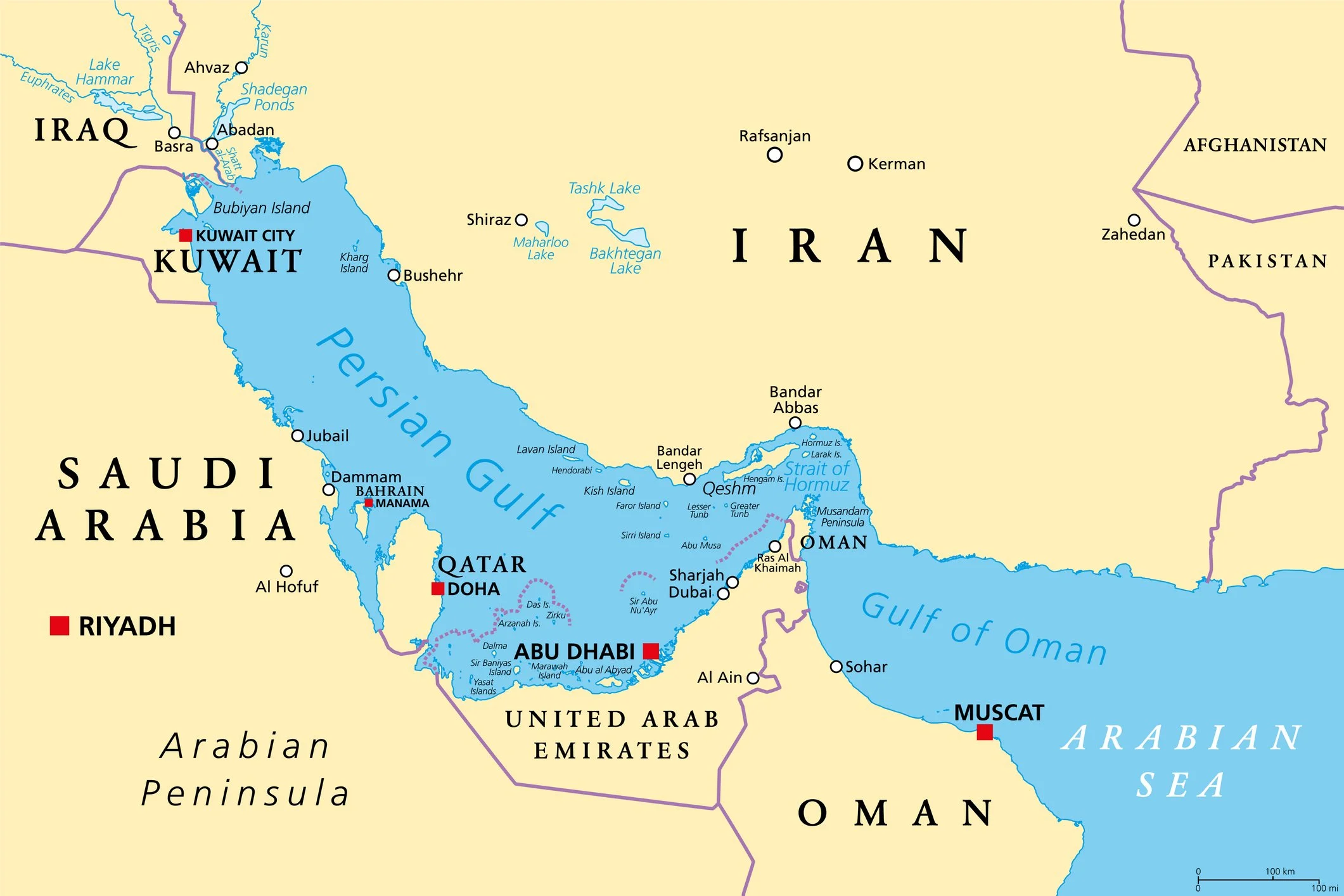
Desalination plants are the backbone of middle eastern water supplies. Water is the most coveted resource in this oil rich region. Over 400 desalination plants operate in the gulf. Iran has (had) 75 operating plants at the outbreak of the war. Unlike its neighbors, Iran’s reliance on desalination is relatively low, only about 5% of its total water use. Contrast that to the six nations of the Gulf Cooperation Council (Bahrain, Kuwait, Oman, Qatar, Saudi Arabia, and United Arab Emirates) where some countries supply more than 90% of their potable drinking water from desalination.
So, it’s a big deal when the war targets desalination plants. Iran claimed an Israeli/American attack against its Qeshm Island desalination plant (both Israel and the US denied responsibility). Bahrain alleged an Iranian drone hit one of its desalination plants. More importantly, desalination plants can’t function with the presence of even a small amount of oil in the water; as tankers and refineries spill oil into the gulf from attacks, risks to critical water infrastructure are multiplied.
Few would argue that water is indispensable to life. Humans are fragile, capable of living only 3-7 days without water. The Geneva Conventions (IV Convention, 1949), UN Security Council Resolution 2573 (2021), and International Humanitarian Law (overseen by the ICRS), all make it a war crime to “attack objects indispensable to the survival of civilian population.” That’s drinking water and drinking water infrastructure.
While sounding like an oxymoron, there are moral and legal limits to the conduct of war. Beyond the consequences of international law, there are the social and political repercussions of conducting war in a manner that attacks and alienates the civilian population. If a goal is regime change, how war is conducted is critical. Extreme care should be given to avoid any attacks of civilian water infrastructure. Iran was already in a water crisis that was the number one topic of dissent of its population before the war. Lack of water was foremost on the Iranian mind. As a result, Iran was teetering on edge of regime change before February 28.
It would indeed be ironic if the conduct of the war resulted in the population coalescing around a failed regime for a lack of fresh water and other critical infrastructure.